District 200 taxpayers face a budget that spends $7.5 million more than it brings in, driven by capital construction costs that will drain reserves by more than $7 million this year. The spending plan is now open for public review.
The board approved a resolution Thursday, Aug. 20, placing the tentative fiscal year 2027 budget on public display for 30 days and scheduling a public hearing for Sept. 24, when members are expected to adopt the final budget. The meeting took place at 5:30 p.m. in the board room at 201 N. Scoville.
What's in the budget
The tentative budget, first unveiled at the Aug. 6 board meeting, projects total expenditures of just over $129.5 million against roughly $122 million in revenue. Operating funds alone show a slim surplus of about $900,000, but $27.7 million in capital spending pushes the bottom line to a net deficit of nearly $7.5 million, according to the Wednesday Journal's Aug. 13 reporting on the budget.
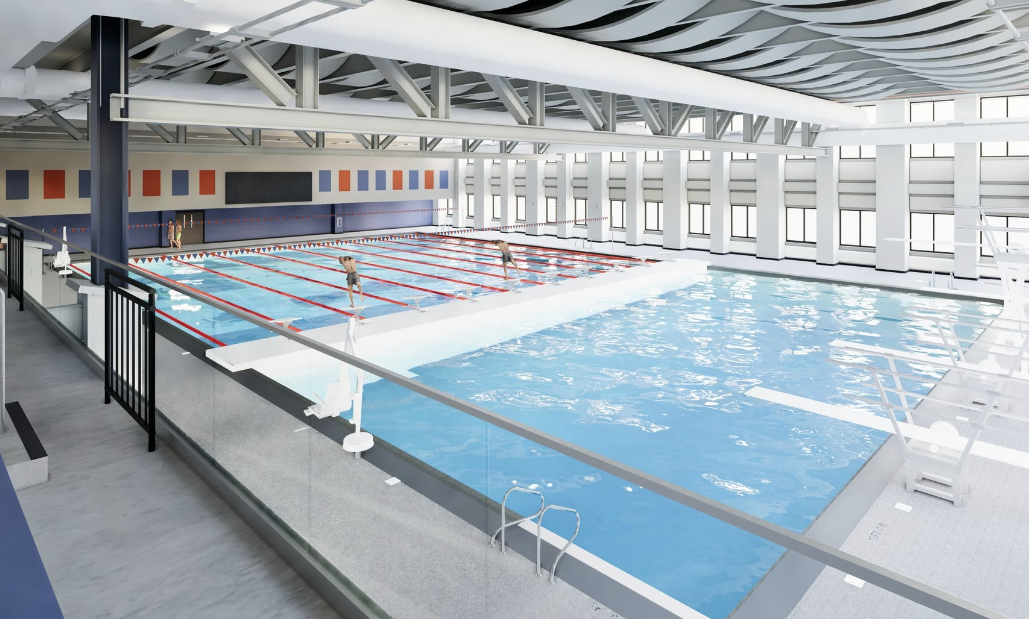
That capital spending is driven largely by Project 2, the nearly completed physical education wing on the building's southeast corner. The district has been drawing on $44.2 million in cash reserves to fund the construction. Overall reserves are projected to drop from about $45.5 million to $38 million by June 30, 2027, leaving roughly 34% of annual operating expenditures in reserve, within the board's 25–50% target range.
Property tax revenue is expected to reach $89.2 million in FY2027, a $7.8 million jump from the prior year after the board approved a 4.4% levy increase last December. Two one-time government grants also bolster the budget: an $8.9 million federal grant for the school's new geothermal heating and cooling system and a $3.5 million state grant obtained with help from the Imagine Foundation. Director of Finance Brian Imhoff told the board at the Aug. 6 meeting, as the Wednesday Journal reported, that the federal geothermal grant may not arrive until May or June 2027.
Rising special education costs remain a pressure point. Outplacement spending is projected to climb about $1 million, or 18%, with tuition at specialized schools expected to exceed $4 million and residential placements averaging $210,000 per student. "We have very little control over these costs because these students require services that can't be provided in-house," Imhoff said at the Aug. 6 budget presentation, as reported by the Wednesday Journal. "All it takes is one or two students with severe needs to blow up the budget."
Graduates and tech purchases
The board also certified 795 members of the Class of 2026 as graduates. That's official now.
Members approved three technology purchases totaling $235,298: $93,110 for Newline interactive displays, wall mounts and mobile carts; $60,534 for a Business Education video gaming and multimedia lab computer refresh; and $81,654 for a Visual Arts graphic design computer refresh.
What's next
The tentative budget will be available for public inspection through late September. The board's regular meeting on Sept. 24 will include a public hearing followed by a vote on final adoption. Residents can submit written comments or sign up to speak at that hearing.