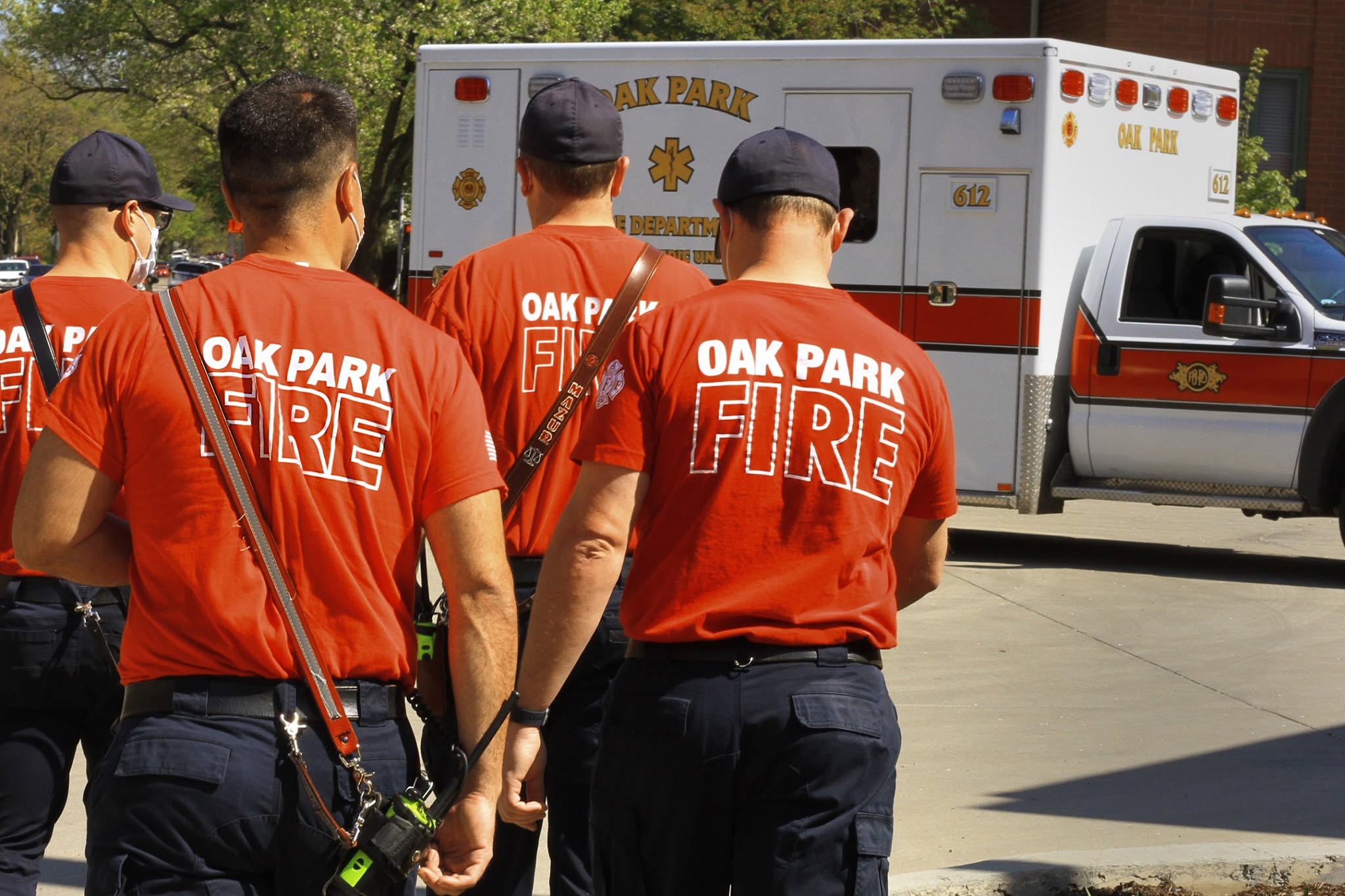
Oak Park firefighters are giving blood and urine samples as part of a statewide study that will track how their job affects cancer risk over the next three decades.
The Oak Park Fire Department enrolled in the Illinois Firefighter Cancer Risk Study, a long-term project run by the University of Illinois Fire Service Institute, according to the village's weekly report for the week ending Oct. 30. The institute's 40-foot mobile laboratory visited the main fire station to collect samples from volunteer participants. Media Production Manager Joe Kreml produced a video documenting the visit.
More than 100 Illinois fire departments have joined the study, which began in late 2024 and will follow participants for up to 30 years, Medical Daily reported Aug. 9.
What firefighters do in the study
Participating firefighters provide blood and urine samples, complete a baseline health questionnaire and an annual cancer survey, and log their exposures after incidents. Researchers use that data to connect specific occupational exposures to later health outcomes. Participation is voluntary and can be withdrawn at any time, according to the Fire Service Institute's project page.
The study is open to all Illinois firefighters aged 18 and older, including retirees, emergency medical responders, volunteers and career personnel of any rank.
Why Oak Park signed up
Oak Park Fire Chief JT Terry said the department hopes to benefit its own firefighters through enhanced screening and early detection while contributing to research that improves safety across Illinois and beyond, according to Medical Daily. He noted the study brings together "resources that individual fire departments simply cannot replicate" on their own.
The department employs roughly 79 sworn firefighters, paramedics and civilian personnel, according to Medical Daily. Participants receive health screening they would not otherwise get on a department budget.
Farzaneh Masoud, director of research at the Fire Service Institute, described the fire service as a severely understudied population, according to Medical Daily. Researchers examine biomarkers of exposure alongside biomarkers of effect, she said, using annual sample collection to study how accumulated toxicants act on the body over time.
Cancer risk in firefighting
The World Health Organization's International Agency for Research on Cancer classified occupational exposure as a firefighter as carcinogenic to humans in 2022, its highest hazard category, according to Medical Daily. That review found sufficient evidence in humans for mesothelioma and bladder cancer.
The Illinois study focuses on how accumulated occupational toxicants relate to later cancer risk. It has produced no results yet. Findings will emerge over decades, not months.