Cook County residents who sustained storm damage on Monday, July 27 have until Wednesday, Aug. 5 to complete an online damage survey that could unlock recovery assistance from the county and state.
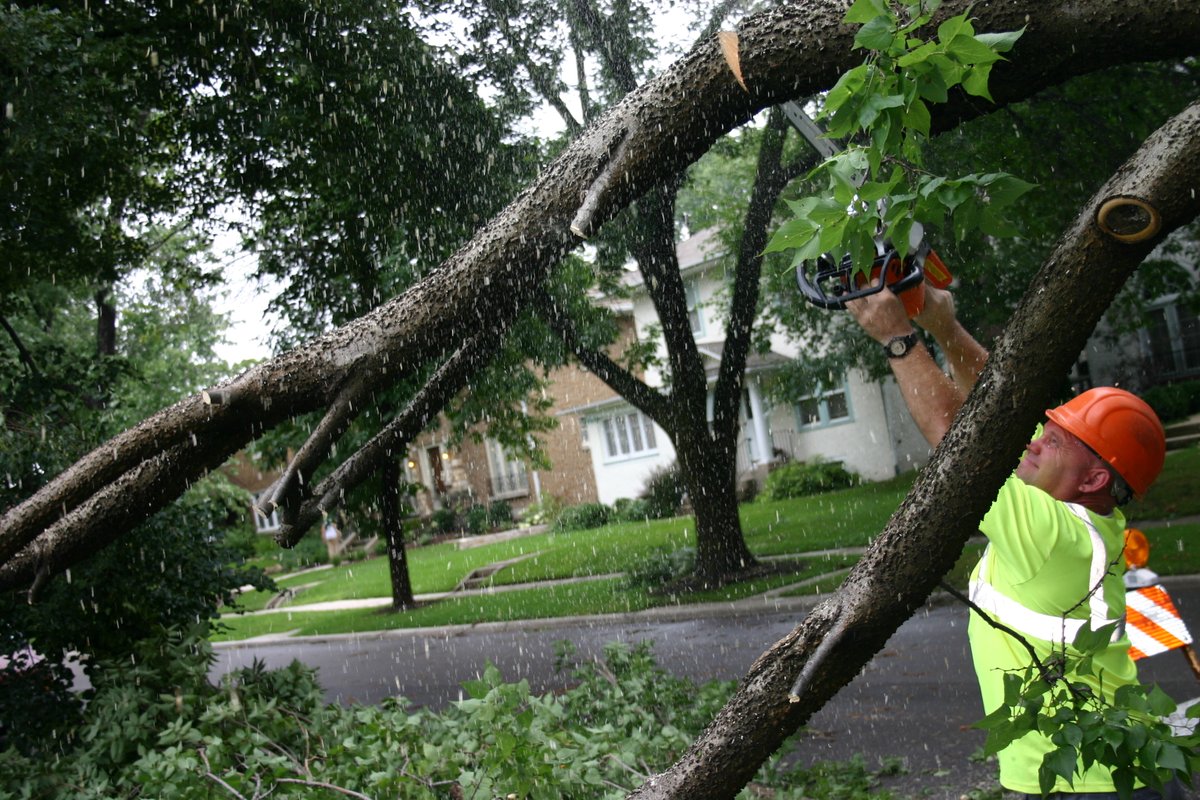
Board President Toni Preckwinkle signed a disaster proclamation on July 30 after severe storms tore across the region three days earlier, knocking out power to more than 530,000 ComEd customers, downing trees and power lines, and spawning at least seven confirmed tornadoes in suburban communities.
No tornadoes touched down in Oak Park or River Forest. But the storm system reached the near-west suburbs. Shoppers in North Riverside sheltered in their vehicles as severe weather struck on July 27, according to the Chicago Tribune.
In some pockets of Cook County, two inches of rain fell in just two hours, the Metropolitan Water Reclamation District reported.
The proclamation enables the county to pursue resources for communities and residents recovering from the storms.
What the county is doing
The Cook County Department of Emergency Management and Regional Security (EMRS) has worked with more than 15 municipalities since July 27, fulfilling requests for generators, excavators, portable light towers, debris removal, and road clearance in partnership with the Cook County Department of Transportation and Highways, according to West Cook News.
EMRS is also coordinating with ComEd, the American Red Cross, and the Salvation Army to assess damage across the county.
How to report damage
Any Cook County resident affected by the July 27 storms can fill out the Illinois Residential Self-Assessment Survey on the Cook County damage assessment page before the Aug. 5 deadline. The survey is available in English, Spanish, Polish, Ukrainian, and Mandarin.
The data will help EMRS and the Illinois Emergency Management Agency determine whether the county and state can pursue additional assistance for residents.
Completing the survey is voluntary. It does not guarantee disaster relief and is not a substitute for filing a claim with your insurance company.
Broader context
The National Weather Service confirmed EF-1 tornadoes in Country Club Hills, Glenwood, and Lynwood, with additional damage in Harvey, Markham, Homewood, and Lansing, according to West Cook News.
Separately, ABC 7 reported EF-1 tornadoes confirmed in Hazel Crest and Lansing, and EF-0 tornadoes in Glen Ellyn, Orland Park, Wheaton, Downers Grove, and Romeoville.
Illinois had already set a record for tornadoes in 2026 as of July 27, with 220 confirmed statewide, more than twice as many as any other state, according to the Chicago Tribune. The state has logged nine "significant" weather events this year, the most in the past decade.
Preckwinkle said in her July 30 statement that her administration would continue supporting local recovery efforts and pursuing all available resources to help communities rebuild.
The survey deadline is Wednesday, Aug. 5.