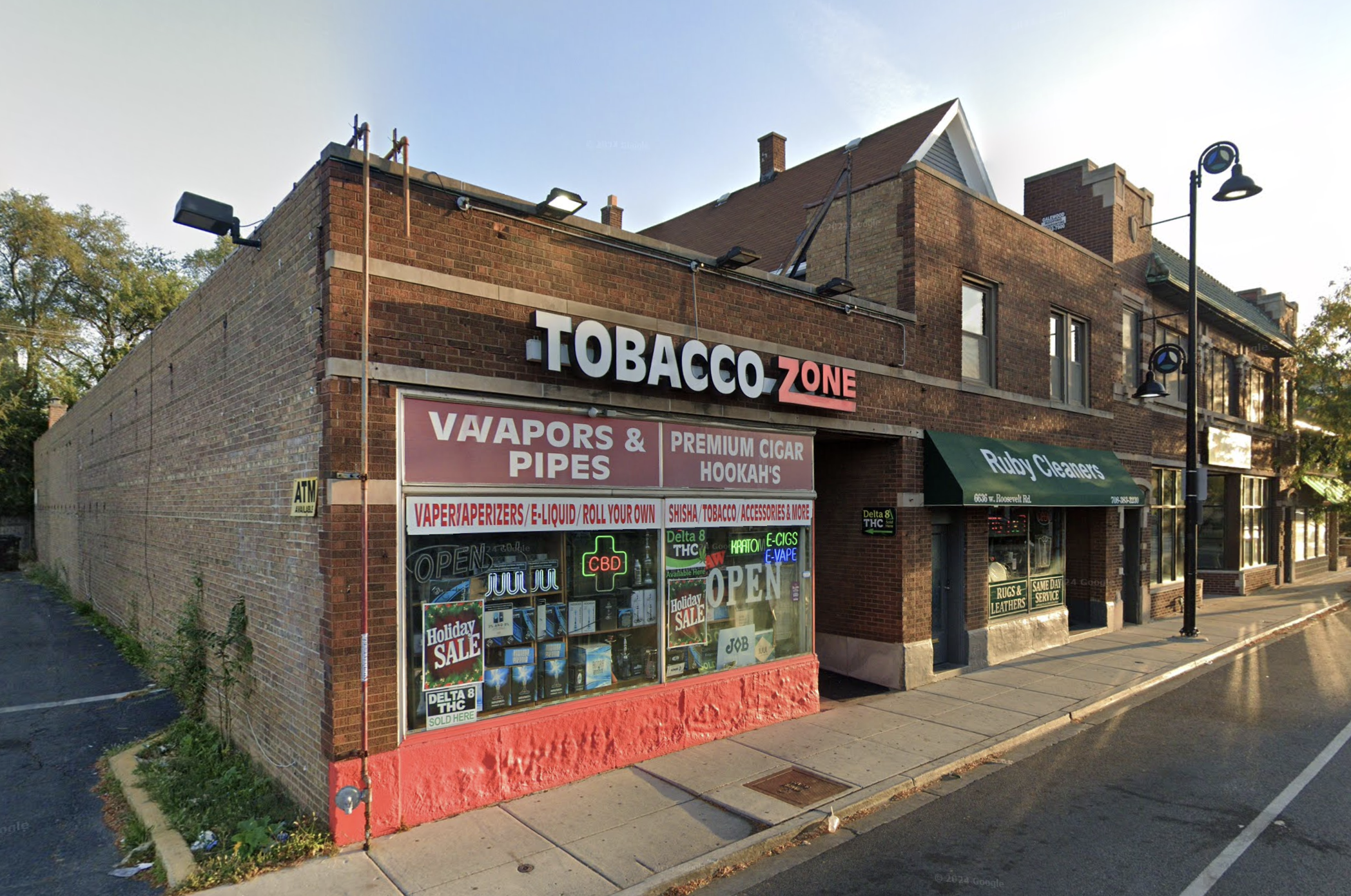
Smoke shops and hemp retailers in Oak Park have until Nov. 12 to adapt to new rules that will pull most THC-infused products off their shelves and funnel those sales to state-licensed cannabis dispensaries.
The Village Board amended its intoxicating hemp and kratom ordinance at its Tuesday, July 28 meeting, aligning Oak Park with a new federal THC cap and the Illinois Hemp Act (Senate Bill 3222), which Gov. JB Pritzker signed June 12, according to the Wednesday Journal. Under the changes, any hemp-derived product containing more than 0.4 milligrams of total THC per container can only be sold at licensed cannabis stores starting Nov. 12. A standard 10-milligram THC gummy exceeds that threshold by 25 times.
For a shop like Tobacco Zone, 6638 W. Roosevelt Rd., which has served Oak Park for about 16 years, the shift threatens a primary revenue stream.
"That's the source of income for smoke shops," employee Ishaak Hamdan told the board July 28. "Cigarettes you don't make money on, so the delta and the kratom stuff are a big reason why half the smoke shops are still open. If they took away those two things, I think most smoke shops would shut down."
Legal experts estimate roughly 95% of existing hemp-derived cannabinoid products will become federally unlawful under the new definition. The federal FY2026 Agriculture Appropriations Act, signed in November 2025, redefined hemp to include total THC on a dry-weight basis, closing a loophole in the 2018 Farm Bill that had allowed Delta-8, Delta-10, and HHC products to be sold outside the dispensary system.
Wake-N-Bakery, a hemp retailer at 1012 Lake St. that operates 10 locations, posted a customer advisory in March urging buyers to stock up before the deadline.
Kratom gets a licensing framework
The amended ordinance also brings kratom under a new local tax-and-license regime. Retailers selling kratom must now pay a $300 annual licensing fee and collect a $1.31 per-unit tax.
The board debated going further. Oak Park Public Health Director Greg Olsen told trustees that poison control calls specifically for kratom have surged 1,200% over the past decade, and that tested products have contained heavy metals, pesticide residue, and potency levels that don't match their labels. Village President Vicki Scaman flagged the concentrated variant known as 7-OH as a particular concern.
But trustees stopped short of a ban. Trustee Brian Straw noted that a smoke shop in Berwyn sits directly across Roosevelt Road from Tobacco Zone, meaning an Oak Park-only prohibition would simply redirect customers one block over. He argued that public education would be more effective than a ban without regional coordination, giving residents a better chance to understand the risks of variable potency and overdose.
Hamdan, the Tobacco Zone employee, said the store sources its kratom only from licensed wholesalers and suggested clearer packaging and dosage limits as a workable alternative.
Twenty-four Illinois municipalities have banned kratom outright, according to Olsen, including Rolling Meadows. Naperville is working on its own ban.
The majority of trustees agreed that public education should come first. Scaman said she would reach out to neighboring government officials about coordinating a regional ban.
"I'll vote for this one because it's all I can do at this time, and support coming back with a ban," Scaman said. "I guess I'll be calling my colleagues."
What Oak Park retailers need to know
Oak Park first enacted local hemp and kratom regulations effective June 1, 2025, including a ban on sales to anyone under 21 and rules governing product display. The July 28 amendment adds the kratom licensing fee and per-unit tax immediately. The broader Nov. 12 deadline governs when high-THC hemp products must leave non-dispensary shelves entirely.
No date has been set for a follow-up discussion on a full kratom ban.