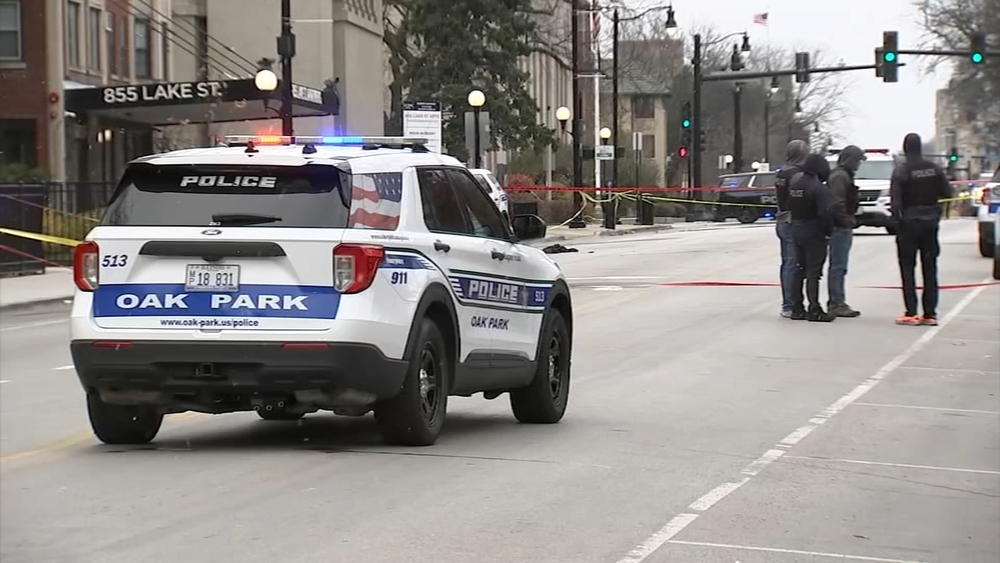
The seven-member committee that monitors Oak Park police conduct is operating under an 11-project work plan for 2026 that emphasizes tracking use-of-force incidents and racial disparities in citizen complaints. The plan was in effect months before the village's first fatal police shooting in nearly 40 years.
The Citizen Police Oversight Committee's 2026 Work Plan, published on the village's official website, details how the panel will review Internal Affairs investigations, maintain a complaint log tagged for racial bias, use of force, mental health concerns, and repetitive allegations against the same officer. The committee must deliver semi-annual reports to the Village Board summarizing complaint data including complainant and officer ethnicity, gender, residence, investigation timelines, and findings from both the Oak Park Police Department and the CPOC.
The CPOC was scheduled to approve its first semi-annual report at its Monday, March 16 meeting, according to the posted agenda.
How much power the committee has
The CPOC operates under a "review model" in which it can vote to agree or disagree with police internal investigations, but its rulings are not binding. Police Chief Shatonya Johnson is not bound by the committee's recommendations.
Founded in 1991, the CPOC is considerably older than most peer oversight bodies around the country. The Village Board approved $100,000 in November 2024 to fund a review of the committee's structure by Pivot Consulting Group. The board unanimously accepted Pivot's final report on Tuesday, October 14, 2025.
CPOC Chair Kevin Barnhart said in May 2025, when the Pivot review was underway, that the committee was focused on modernizing: "Overall, we're looking towards the step of the role of CPOC evolving in this community and standards changing so that we're not doing something from 35 years ago."
Deadlines and accountability
Under the work plan, informal complaints must be investigated within 60 days of filing. Formal complaints get 120 days. The CPOC reviews each completed case at its next regular monthly meeting.
The plan also calls for a Q2 review of the CPOC's governing ordinance and a Q3 overhaul of its procedural rules. Both efforts will incorporate Pivot Consulting Group's recommendations as approved by the Village Board.
The Wallace shooting
The work plan's complaint and use-of-force tracking framework is now being tested in a year defined by the Sunday, May 31 fatal shooting of 38-year-old Chicago resident Christian Wallace by an Oak Park officer during a traffic stop at the Shell station at Austin Boulevard and Harrison Street. The plan predates the shooting.
The Illinois State Police Public Integrity Task Force is investigating. As of early July 2026, no timeline for a charging decision has been made public. The village released a 29-minute video compilation on Monday, June 30, showing body-cam, dash-cam, and gas station security footage.
Chief Johnson said in a statement accompanying the release: "We recognize this video may be difficult to watch, and our thoughts remain with everyone affected by this incident."
The officer, who has not been publicly identified, remains on medical leave. The shooting was the first by an Oak Park officer since 1988.
What's next
The CPOC's discretionary budget for 2026 is $3,600: $3,000 for membership and training through the National Association for Civilian Oversight of Law Enforcement and $600 for community outreach materials. The committee meets at 7 p.m. on the third Monday of each month at Village Hall. Its next meeting is Monday, July 21.